Scaling an enterprise energy platform
With the Kaluza platform growing from 4.7k to 14.5k users and from 3 to 5 markets by 2028–2029. I set the IA direction and built the framework, governance and alignment around it.
- Role:
- Lead Product Designer at Kaluza
- Year:
- 2026
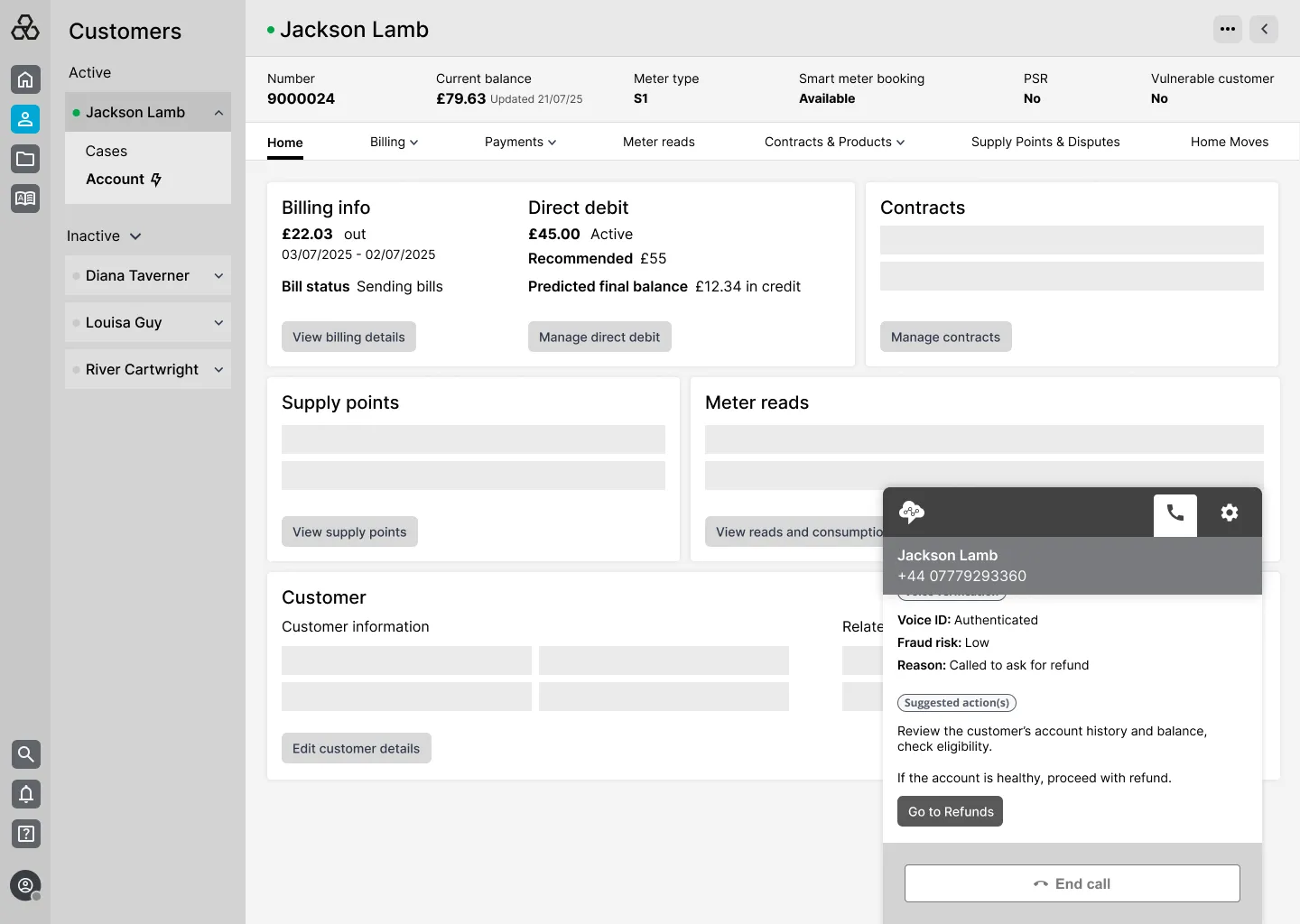
The problem(s)
Delivery
Developers absorb rework when patterns aren’t clear, features take longer to ship, third-party dependencies grow, and teams stay more reactive.
Users
Cognitive overload, unpredictable interactions and inconsistent layouts so that they can’t build reliable mental models, affecting time on task.
Commercial
Every new client deployment requires rework, every new market has the potential to add inconsistency, every new persona creates technical debt, putting retention and revenue at risk.
Learning and shaping direction
After reviewing previous research reports, interviews and shadowing notes, I learned that users mostly pattern-match rather than navigate, and that structural changes to navigation, for example, led to confusion and error.
The navigation was only skimming the surface, though.
What I concluded was that the Information Architecture needed a profound change in order to accommodate a significant change in the entity model: evolve from an account-centric model to a customer-centric model.
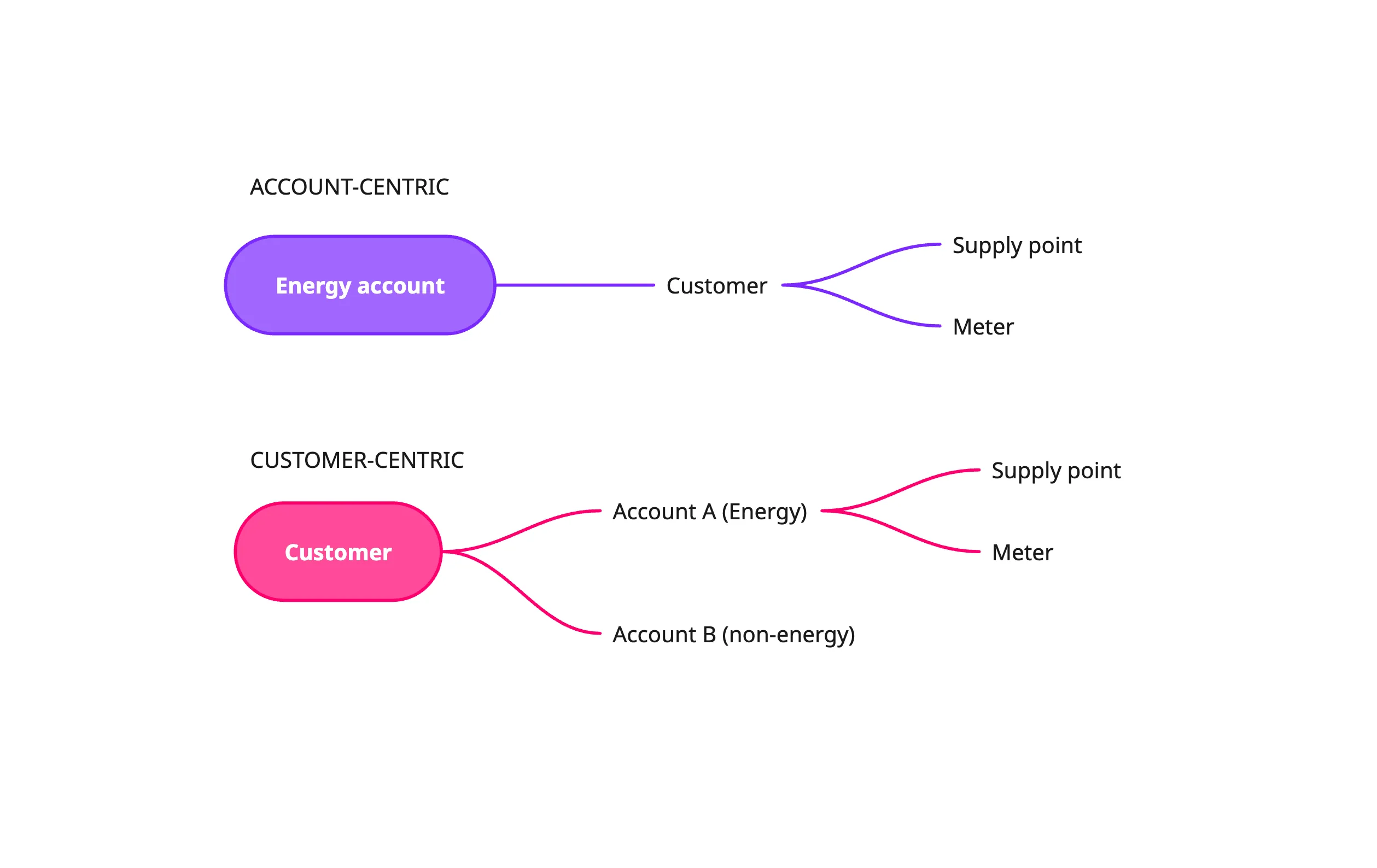
This insight opened up discussions with senior engineers about architecture and data models. I was invested in understanding how feasible this was, as business decisions were made that required the platform to extend and — apparently — reinvent the whole hierarchy and entity model.
In this context, there wasn’t a clear understanding or alignment on what the future of the platform would look like. Discussions were mainly abstract and somewhat nebulous.
I decided to invest in a visiontype that could render a plausible and feasible future of the platform, a re-imagined UI that could accommodate these changes, while maintaining current functionality in the near future (3+ years ahead).
Rendering tangible futures
I picked one very common and well known user journey to serve as the basis for the visiontype — handling a customer refund request. This worked because it was quite common; it’s a journey quite segmented across different systems (CRM, energy billing, CCaaS) and different vendors.
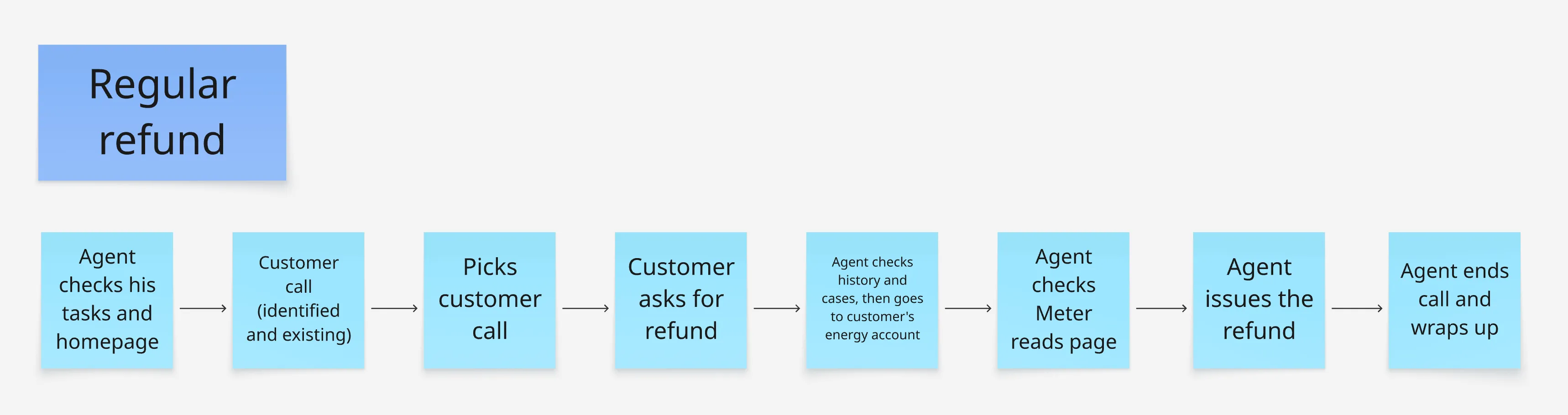
The visiontype paints the picture of what a unified platform could look like, with Kaluza handling all those services and providing a frictionless user journey. It’s also a stress-test for the new customer-oriented entity-model.
Quite good internal feedback, generated lots of discussion about gaps, what would follow-up on this. Generally people felt this made sense and was aligned with their own expectations and thinking.
It also aligned with the agents’ mental model and well-known pain of having to deal with the cognitive load of having to go through multiple systems to finish a task.
After doing a bit of a roadshow and sharing this with multiple teams, I was reassured by overwhelming positive feedback that this was a product direction we should follow.
The pivot
All these developments presented a great opportunity to dive deeper into the information architecture of the platform. This was a product that grew organically and that was missing some hierarchy structure and scaffolding.
The initial scope of reviewing the navigation now felt like a very small contribution inside a much larger challenge.
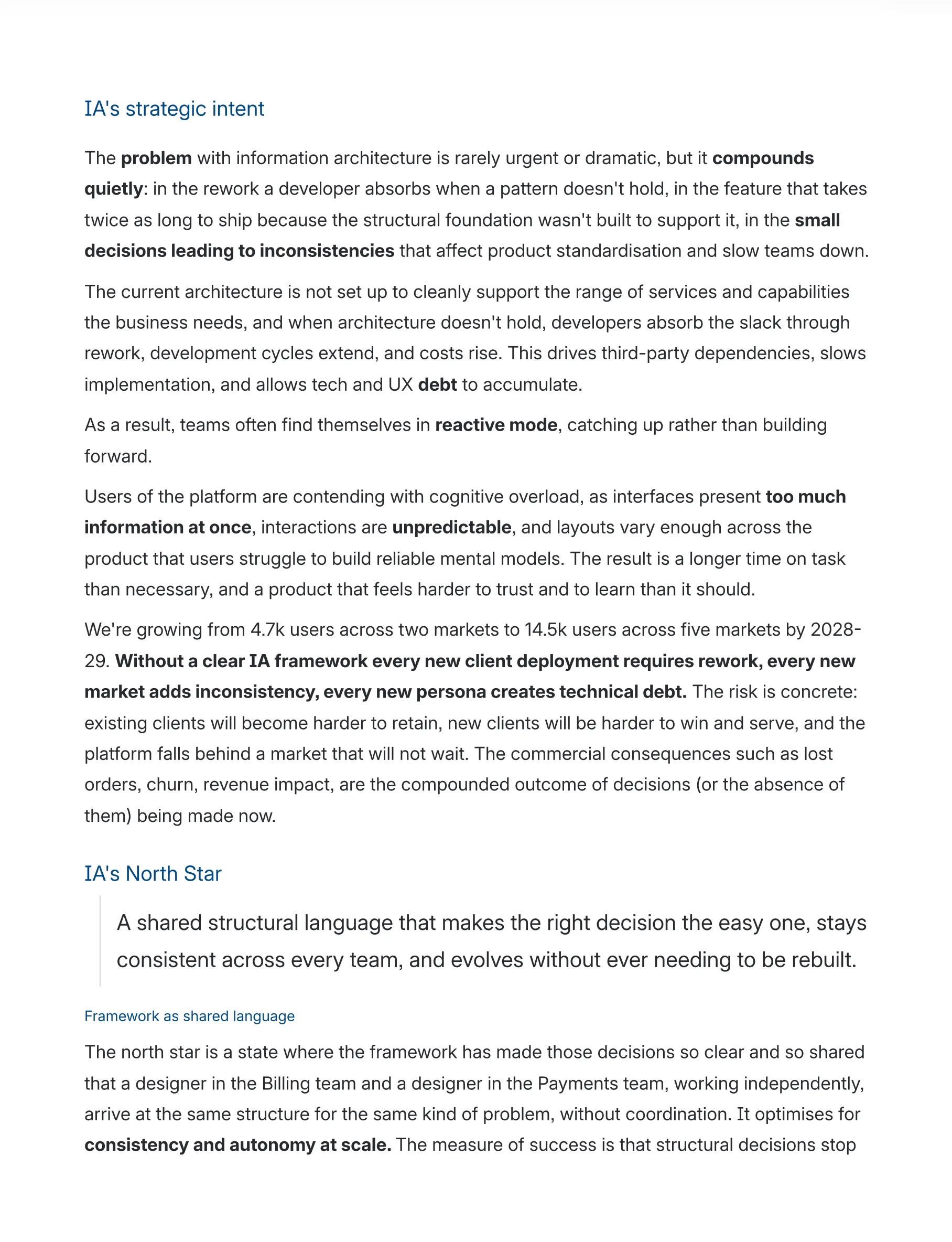
What was unlocked
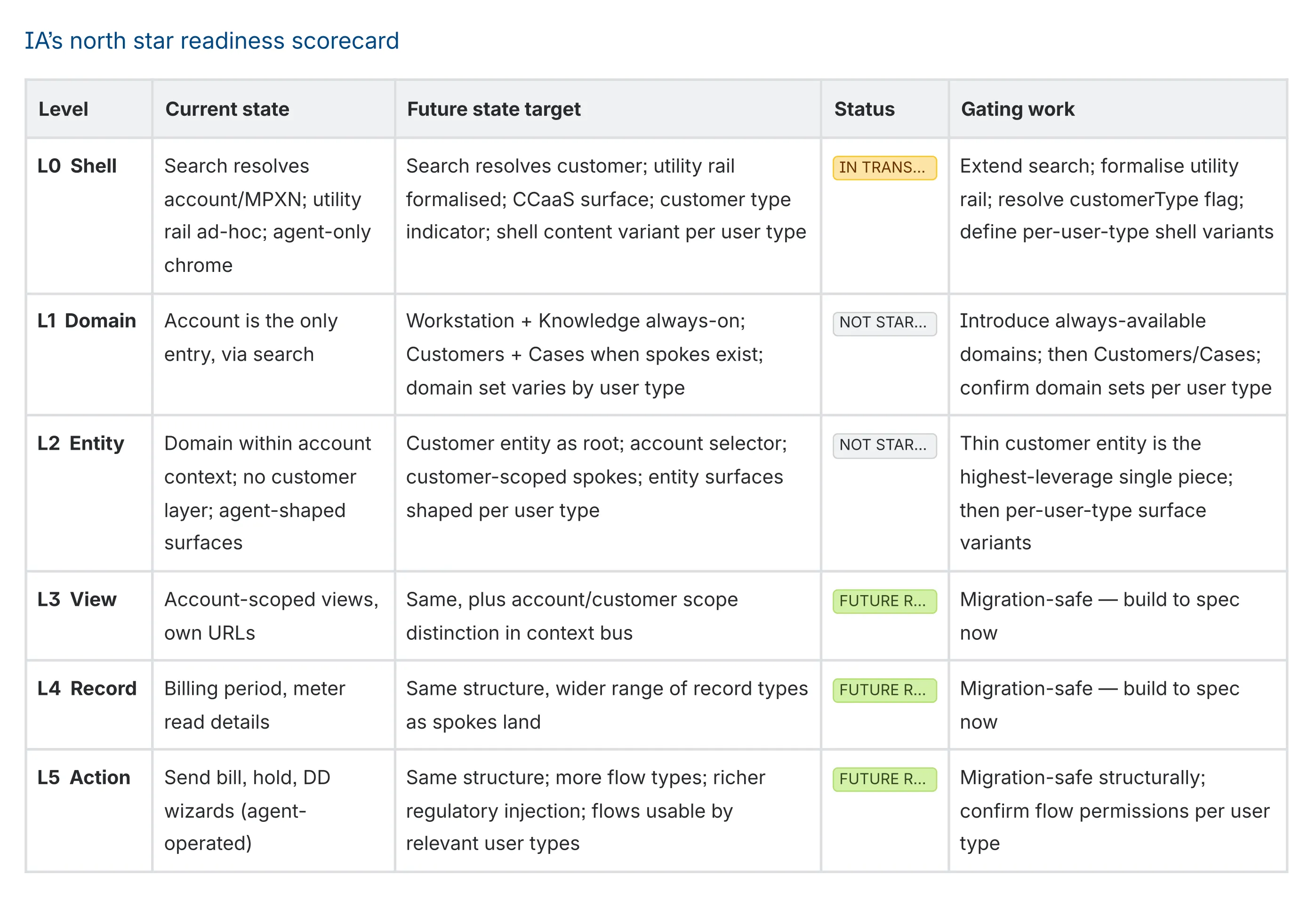
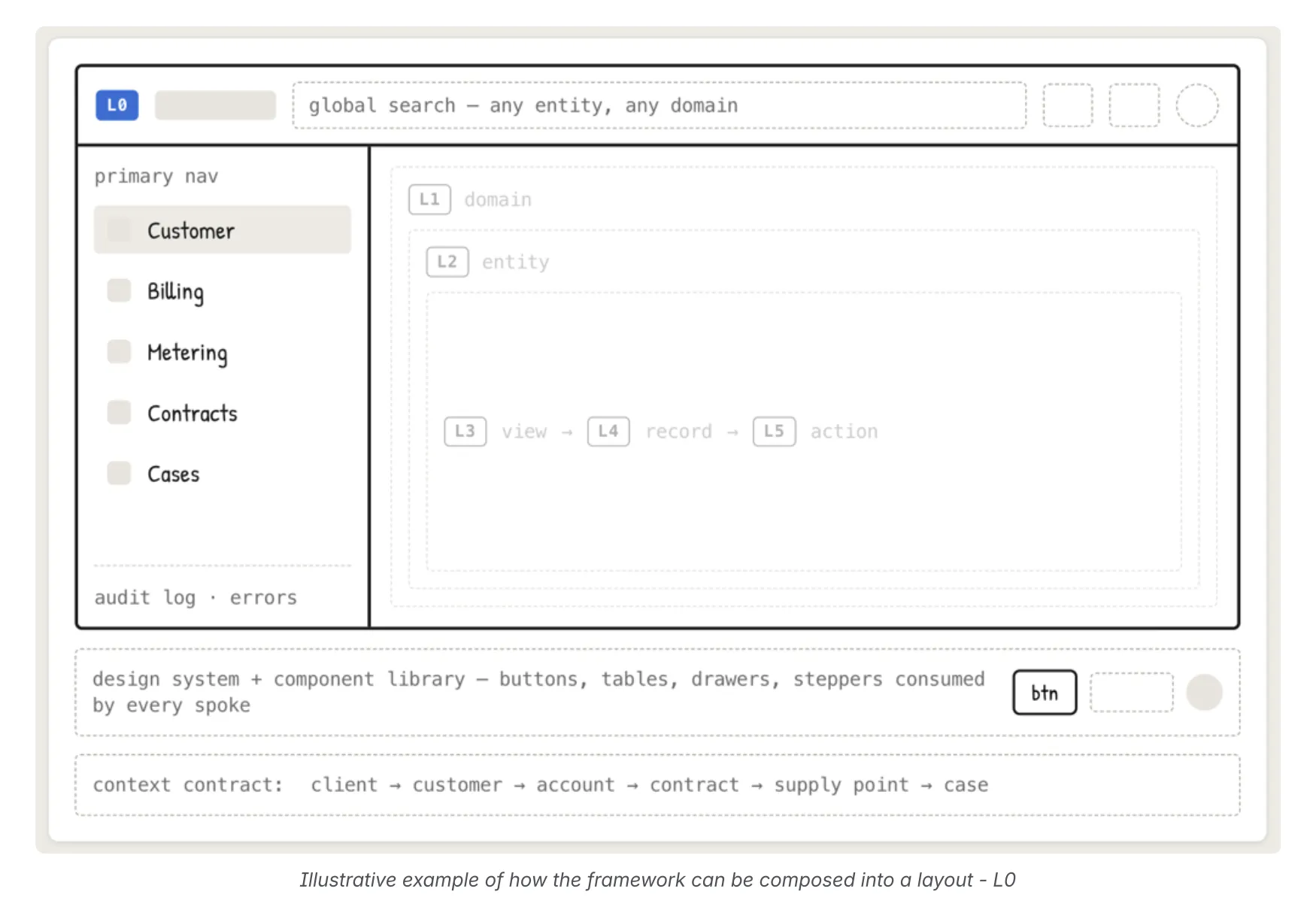
I started working on a six-level IA framework with criteria for each level, plus practical rules for designers on how to use it. After testing and iterating on each level definition and general rules, the IA framework would progressively be adopted across all product teams.
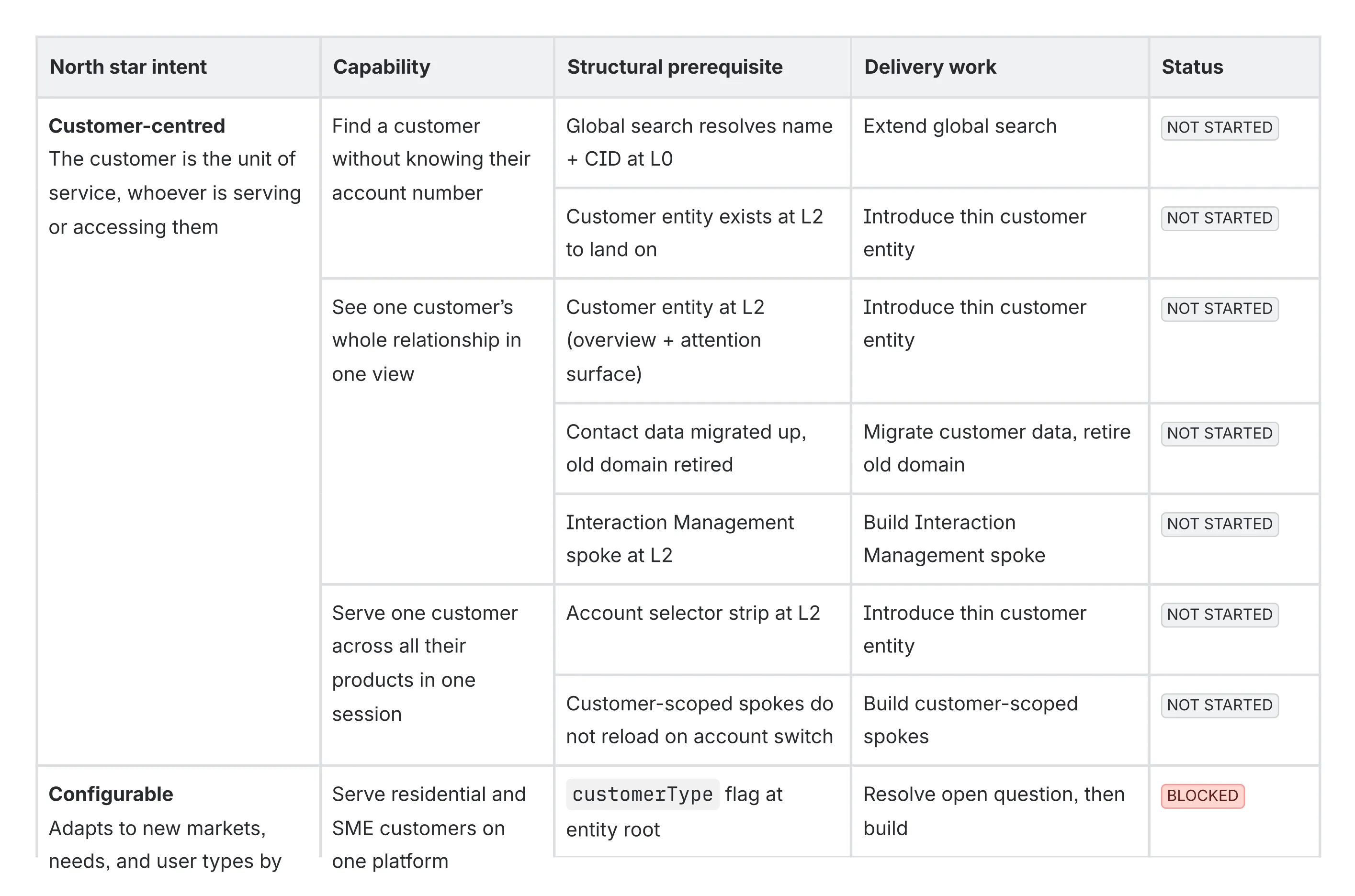
The goal was now for the platform to reach the customer-centric model progressively, without a big bang rewrite and rework and without teams sitting idle, blocked by structural decision making.
Rules and guidance were needed for that to happen. I created a UI component reference placing every component at its level, for both current and future models. I also did a gap analysis between the current (as is) state and the future (to be) state of the IA framework.
Structural decisions stop being debated case by case and stop needing a central reviewer, as the framework becomes the reference point to follow, with clear instructions on how to approach decisions.
Outcomes and achievements
The initiative evolved to have systems-level outcomes and impact in 4 main areas:
- Sway: a formal global IA role with decision rights over navigation, taxonomy and URL structure across value streams, markets and clients
- Standing: IA recognised as one of four platform frameworks, next to Architecture’s data model and Product’s taxonomy
- Direction: the customer-centric, hub-and-spoke future state expressed in IA terms and adopted as the initiative’s model of how the platform’s UX will work
- Progress: gap analysis and progression model aligned with release model (Early Access and General Availability)
Learnings
- Structural problems get resourced when they’re framed as retention and growth risk
- Enforced consistency is brittle and needs a reviewer, it needs to emerge instead of policed
- Guidance and governance should be treated as a product — versioned and iterated openly